Freight yards are unforgiving places. The ground is often a patchwork of cracked concrete, railroad tracks, and packed gravel. Loads arrive on tight schedules, and the space between a trailer's rear doors and the next parked rig can shrink to a few feet. A 5 ton forklift sits right in the middle of that chaos, heavy enough to move real tonnage but compact enough to thread through crowded lanes.
What makes yard duty different from warehouse work comes down to three things: surface variability, load inconsistency, and time pressure. A warehouse floor is flat and predictable. A freight yard is not. That single difference changes how an operator should think about stability, speed, and inspection routines before the first pallet ever gets lifted.
The tips below come from years of watching yards operate, including a three-month stretch spent reviewing incident reports and operator logs at a rail-adjacent distribution hub in the Midwest. The patterns that emerged were consistent, and most of them had nothing to do with the machine itself.
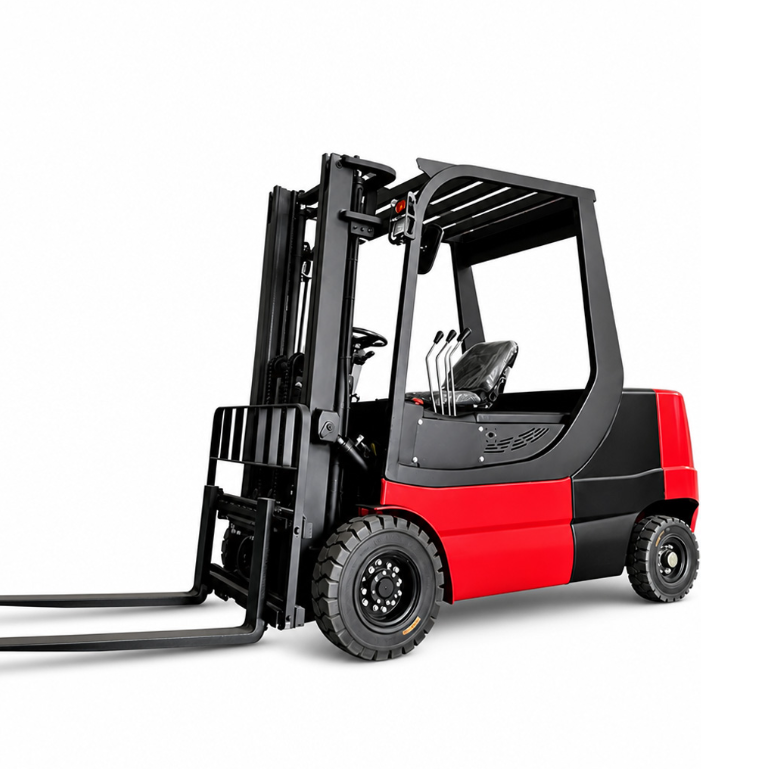
Experienced operators walk the route before they drive it. That sounds basic, but it gets skipped constantly when schedules tighten. On a 5 ton forklift, the mast and counterweight create a high center of gravity even when unloaded, so a soft shoulder or a washed-out gravel patch near a drainage grate can shift the whole machine sideways faster than most people expect.
A few ground conditions deserve extra attention:
Railroad crossings and embedded tracks, which can catch a steer tire and twist the chassis
Freshly patched asphalt that has not fully cured, especially in summer heat
Potholes hidden under standing water after a rain event
Transition strips between concrete pads and gravel, where the surface height changes by an inch or more
The rear steer axle on a counterbalance truck amplifies whatever the ground does. A small dip under one rear tire translates into a noticeable swing at the counterweight end, and that swing is what tips machines in yards far more often than overloaded forks.
Freight yards rarely handle uniform pallets. A single shift might involve steel coils, bundled lumber, bagged material, and oversized crates, sometimes all within the same hour. Each of those loads has a different center of gravity, and the load chart on a 5 ton forklift assumes a specific load center, usually 24 inches or 48 inches depending on the carriage configuration.
Here is where the math gets uncomfortable. Lifting 5 tons at a 24-inch load center is one thing. Lifting the same weight with the load center pushed out to 36 inches reduces actual capacity significantly. The table below shows how capacity drops as load center moves outward on a typical 5 ton counterbalance truck.
| Load Center (inches) | Rated Capacity (lbs) | Practical Yard Application |
|---|---|---|
| 24 | 10,000 | Standard palletized freight |
| 36 | 7,800 | Long crates, bundled pipe |
| 48 | 6,100 | Coils, extended rigging |
| 60 | 4,900 | Oversized structural pieces |
That 60-inch row is where a lot of yard incidents originate. An operator sees a 5 ton rating on the data plate and assumes it applies everywhere. It does not. The data plate rating is tied to a specific load center, and anything beyond that changes the physics.
OSHA's powered industrial truck standard, 29 CFR 1910.178, addresses this directly by requiring that loads be handled within the truck's rated capacity and that the operator understand the load chart. That is not bureaucratic language. It reflects decades of tip-over data.
Yard lanes are narrower than most operators remember when they are focused on the load. A loaded 5 ton forklift needs more stopping distance than an empty one, and the difference is not linear. Momentum scales with total weight, so a machine carrying 10,000 pounds takes roughly twice the distance to stop compared to the same machine running empty at the same speed.
Practical habits that reduce risk in tight lanes:
Keep the forks low, roughly 4 to 6 inches off the ground, even when traveling empty
Sound the horn at every blind corner, not just the ones marked with mirrors
Travel in reverse when carrying a load that blocks forward visibility, and turn the head rather than relying only on mirrors
Reduce speed before entering a trailer, not after the front tires are already inside
Trailer entry deserves its own mention. Trailers are rated for a specific floor loading, and a loaded 5 ton forklift concentrates enormous force on a small contact patch. Nose-first entry at speed can crack a trailer floor or, worse, shift the trailer off its landing gear. The safe approach is slow, straight, and centered, with a spotter when the trailer is not chocked.
Pre-shift inspection is where good yards separate themselves from lucky ones. The checklist matters less than the discipline of actually doing it. A 5 ton forklift accumulates wear quickly in yard service because of dust, temperature swings, and constant load cycling.
Items that deserve a real look, not a glance:
Hydraulic hoses and fittings for weeping or chafing, especially near the mast
Tire condition and inflation, since a soft steer tire changes steering response
Fork heel wear, which quietly reduces load capacity over time
Parking brake function, tested on a slight incline
Overhead guard integrity, particularly after any impact with a trailer or rack
One pattern worth noting from that Midwest hub review: nearly a third of reported near-misses traced back to a maintenance item that had been flagged but deferred. The machine was not at fault. The scheduling decision was.
The best operators adjust their behavior to the yard rather than expecting the yard to accommodate the machine. That means slowing down in gravel, taking wider turns when the load is high, and refusing to lift a load that looks questionable even when a supervisor is pushing for speed.
A useful mental checklist before any lift:
What is the actual weight, not the estimated weight?
Where is the load center relative to the forks?
What is the ground like along the entire travel path?
Is there a clear escape route if the load shifts?
Has the trailer been chocked and the landing gear checked?
None of this is glamorous. It is also what keeps operators going home with the same number of fingers they arrived with.
For yards sourcing equipment, working with a manufacturer that understands these real-world conditions matters. KAIYITE builds counterbalance trucks and material handling equipment with the kind of production discipline that shows up in long-term reliability, backed by a large manufacturing footprint and a supply chain that reaches well beyond domestic borders. That kind of background tends to matter more than a spec sheet when a machine is running two shifts a day in a gravel yard.

Shandong Kaiyite Machinery is an important participant in the construction machinery industry, located in a city known for well-known forklift brands such as Komatsu and Toyota. The factory covers an area of 128000 square meters and currently has over 1800employees, including 390 engineers.
Room 1314, 13th Floor, Block B, Zhongde Plaza, Liying Street, Rencheng District, Jining City, Shandong Province
 Wechat QRCode
 WhatsApp
Copyright © 2026 by Shandong Kaiyite Machinery Co., Ltd. Privacy Policy
 EN