A 2 ton mini excavator is not a toy, and it is not a full-size machine pretending to be small. It occupies a practical middle ground for contractors who need real digging force but cannot bring a 5-ton unit into a backyard or a narrow utility corridor. The operating weight of roughly 1,800 to 2,200 kg gives enough mass to counterbalance a modest bucket load without sinking into soft ground. At the same time, the footprint stays small enough to pass through a standard garden gate or roll onto a trailer behind a pickup. That balance is exactly why rental fleets and landscaping crews keep coming back to this size.
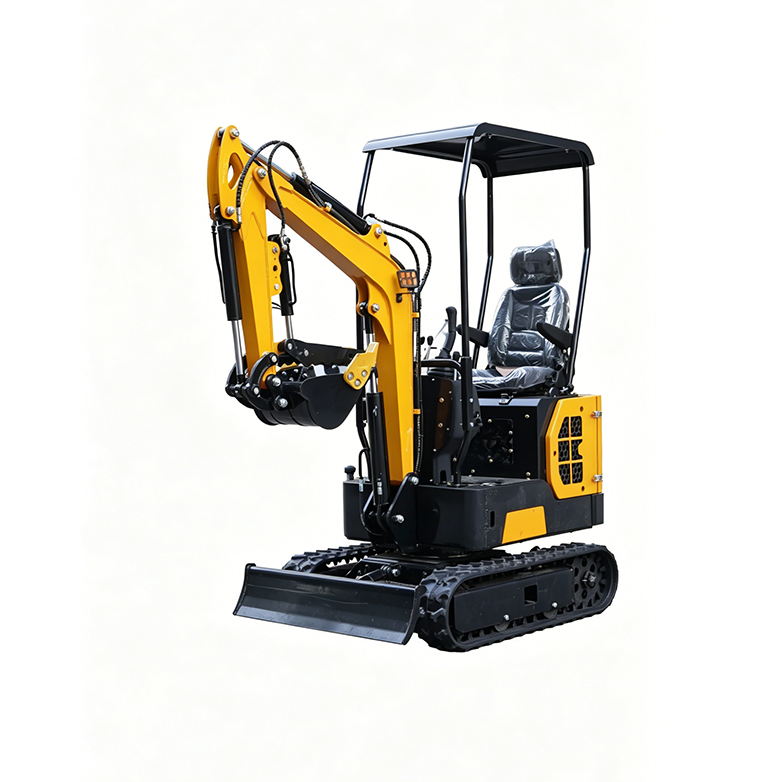
A 2-ton machine typically runs on a diesel engine in the 15 to 20 kW range, or an equivalent electric motor for indoor work. That output is enough to push the machine across uneven ground, climb small slopes, and maintain hydraulic pressure while digging. But the real advantage is not raw power. It is the power-to-footprint ratio. A compact undercarriage with rubber tracks spreads the load and protects finished surfaces, while the short tail swing lets the machine work close to walls. In many residential or urban jobs, that access window matters more than bucket breakout force.
| Feature | 1-Ton Mini Excavator | 2-Ton Mini Excavator | 3.5-Ton Mini Excavator |
|---|---|---|---|
| Operating weight | 900–1,200 kg | 1,800–2,200 kg | 3,200–3,800 kg |
| Typical engine power | 10–13 kW | 15–20 kW | 20–25 kW |
| Max dig depth | 1.8–2.2 m | 2.4–2.8 m | 3.0–3.5 m |
| Standard bucket width | 250–300 mm | 350–450 mm | 450–600 mm |
| Tail swing | Very short | Short | Conventional |
| Best use | Tight indoor, light trench | Utility, landscaping, small demo | Road shoulder, deeper footings |
The table shows how the 2-ton class extends reach and depth over the smallest units without giving up the compact profile that larger machines lose.
Engine power is only half the story. A 2 ton mini excavator delivers useful work through its hydraulic system. Flow rate, measured in liters per minute, determines whether an auger, thumb, breaker, or tilt bucket will run properly. Many compact models in this class offer a standard auxiliary circuit and a quick coupler, which lets one machine shift from digging to grading to demolition in minutes. The key spec to check is auxiliary flow. If a hydraulic breaker requires 25 L/min and the machine only supplies 18 L/min, the attachment will run slow and hot. ISO 7135, the standard for excavator terminology and commercial specifications, defines these ratings so buyers can compare units fairly. The standard does not pick the right machine for a job, but it gives a consistent language.
A contractor in southern China took on a water line replacement along a narrow lane behind a row of shops. The access path was only 1.4 meters wide, with overhead cables and a finished concrete surface. A larger excavator would not fit, and hand digging was too slow for the 80-meter trench. The crew used a 2-ton machine with a 300 mm bucket and a short-tail configuration. It moved through the lane without repositioning constantly, cut the trench to about 1.6 meters deep, and left the concrete edges intact. The operator said the machine felt stable even when swinging a full bucket to the side. The job finished in three days instead of the week that manual labor would have needed. That project showed the 2-ton class is not chosen because it is the most powerful. It is chosen because it can actually get to the work.
Honesty matters when recommending equipment. A 2 ton mini excavator cannot lift a fully loaded 1,000 kg concrete pipe. It cannot dig a 4-meter basement. It is not the right tool for moving large volumes of soil quickly on an open site. For those jobs, a 5-ton or larger machine makes sense. The 2-ton class works best in confined spaces, light to medium trenching, landscaping, and small demolition. The operator also needs to respect the machine's stability limits on slopes. A rubber-track undercarriage gives good flotation, but a high center of gravity plus a full bucket can still tip on uneven ground. Understanding those boundaries prevents accidents and keeps the machine productive.
The best 2 ton mini excavator spec sheet means little if the machine arrives with inconsistent hydraulics or poor assembly. A manufacturer with a large production base and certified processes is more likely to deliver repeatable quality. Kaiyite, for example, operates a 128,000 square meter factory with 32 production lines and a substantial engineering team. Its equipment carries ISO9001 and CE/EU certifications, and products have been exported to more than 120 countries. That manufacturing depth supports the kind of reliability that contractors expect when they put a compact excavator on a trailer every day. A 2-ton machine may be small, but its uptime is as valuable as any larger unit on the fleet.

Shandong Kaiyite Machinery is an important participant in the construction machinery industry, located in a city known for well-known forklift brands such as Komatsu and Toyota. The factory covers an area of 128000 square meters and currently has over 1800employees, including 390 engineers.
Room 1314, 13th Floor, Block B, Zhongde Plaza, Liying Street, Rencheng District, Jining City, Shandong Province
 Wechat QRCode
 WhatsApp
Copyright © 2026 by Shandong Kaiyite Machinery Co., Ltd. Privacy Policy
 EN
EN